
Media & Documents
Videos, PDFs, articles, and reference documents that provide additional learning, insight, and real-world aviation context.
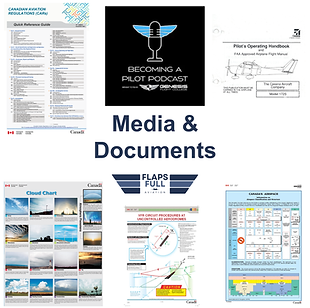
Beyond physical tools and textbooks, aviation relies on authoritative media, documents, and reference materials that help pilots interpret regulations, understand airspace, and stay current with safety procedures. Whether in PDF guides, official government publications, aircraft-specific manuals, or engaging multimedia like podcasts, these resources provide pilots with both essential technical knowledge and insights into training, operations, and best practices. Below are key media and documents every aviator should know about.

Documents
✈️Pilot Operating Handbook (POH)
A Pilot Operating Handbook (POH) is an aircraft-specific manual that provides essential performance and operational information for a particular make and model. Required for safe and compliant aircraft operation, a POH typically includes the following sections:
-
General
-
Limitations
-
Emergency Procedures
-
Normal Procedures
-
Performance
-
Weight and Balance
-
Systems
-
Maintenance
-
Supplements
Pilots use the POH both during pre-flight preparation and in-flight to determine limitations, performance calculations, and review abnormal procedures, making it a required document for safe flying.
For your flight test, know your POH like the back of your hand. While you are permitted to reference the POH for nearly everything (with the exception of Va, Vy, and Vx speeds, which are memory items), relying on it excessively can work against you. Although the POH may be used throughout the flight test, an examiner will not be impressed if it takes you a long time to locate the information you need. Familiarity, not dependency, is the goal.
Caution: not all POH's are the same (Ex, for the C172R, the POH for the standard 160HP engine or the upgraded 180HP engine are different - you can not substitute one for the other). To confirm that you are using the correct POH, verify by matching the registration and serial number to the particular aircraft.
Nav Canada CARs Quick Reference Guide
The Nav Canada CARs Quick Reference Guide is a downloadable PDF designed to help pilots navigate the complex world of Canadian Aviation Regulations (CARs) by summarizing key regulatory requirements in a concise format. While the full CARs documents are comprehensive, this reference guide distills the most relevant regulatory points (such as flight rules, airspace classifications, and operational standards) into an easier-to-digest format that supports quick lookups during study or pre-flight planning. It’s particularly useful for students preparing for Transport Canada exams and for pilots needing a portable regulatory reminder during flight operations.
Click here to view.
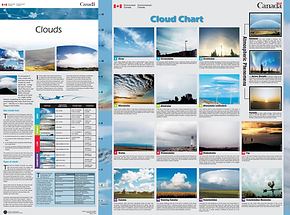
Environment Canada Cloud Chart
An Environment Canada cloud chart is a reference diagram that illustrates common cloud types, their typical altitudes, and associated weather characteristics. The cloud chart helps pilots learn to recognize and interpret cloud formations (such as cumulus, stratus, and cumulonimbus) and understand their implications on visibility, turbulence, and icing potential.
Click here to view.
VFR Circuit Procedures at Uncontrolled Aerodromes
The Transport Canada VFR Circuit Procedures at Uncontrolled Aerodromes document outlines the recommended practices for pilots operating under Visual Flight Rules at airports without active control towers. It details how to enter and fly the traffic circuit, report positions on MF/ATF, and maintain proper lookout to sequence with other traffic, all aimed at reducing risk and improving situational awareness in the absence of ATC instructions. These procedures supplement the rules of the air, helping pilots fly predictable patterns that enhance safety in uncontrolled environments.
Click here to view.
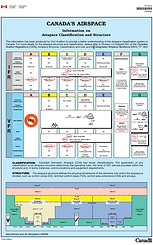
TC Canada's Airspace
The Canada's Airspace infographic was produced by Civil Aviation to provide a better understanding of the airspace classification system in Canada. The infographic depicts the type of airspace in Canada for VFR and IFR operations, and the operating rules associated with each classification.
Click here to view.

This is a POH from a 1976 Cessna 172M. Although it is for a C172, I would not (and can not) use it for the C172R.


Media
Becoming a Pilot Podcast (by Genesis Flight College)
The Becoming a Pilot Podcast, produced by Genesis Flight College and hosted by Dave Angus, is a phenomenal podcast that offers a modern, conversational medium for pilots and students at all stages of their training. Covering topics from your first discovery flight to advanced training pathways, written exam strategies, weather fundamentals, and real-life flight training insights, the podcast blends expert interviews with practical advice. Episodes also feature their in-house flight instructors and industry professionals, offering training tips designed to bolster confidence and broaden understanding beyond traditional textbooks.
While I have enjoyed listening to all of their episodes, a few of my favourites include:
-
Ep. 3 - What Makes a Great Pilot? A Retired Airline Captain Breaks It Down
-
✈️Ep. 7 - Mastering the Forced Approach: Real-World Strategies Every Pilot Should Know
-
✈️Ep. 8 – Acing the Flight Test: Proven Prep Tactics from Instructors Who Know
-
Ep. 15 - Flight Test Standards—What Students Get Wrong
-
Ep. 20 - Winter Flying 101: How to Stay Safe, Prepared, and Confident in Cold Weather Operations

Youtube - Skyhawk Adventures
Skyhawk Adventures is a true hidden gem for Canadian pilots. The channel features Wayne (an IFR rated pilot) and his wife, Jen, as they share their adventures flying their Cessna 172M (C-GQFW). Based out of St. Thomas Municipal Airport (CYQS), the channel showcases flights to small airports throughout Southern Ontario and across Canada.
The videos are both entertaining and educational, featuring raw, unfiltered recordings of all phases of flight. I have found Skyhawk Adventures to be especially valuable when preparing for cross-country flights to unfamiliar airports in Southern Ontario. The unfiltered nature of Wayne’s videos have significantly improved my situational awareness and, ultimately, my safety as a pilot. Kudos to Wayne and Jen for producing such high-quality, educational content.
In addition to content creation, Wayne volunteers with several charitable organizations:
-
Hope Air – Wayne flies ambulatory patients from remote communities to larger centres for essential medical care.
-
Civil Air Search and Rescue Association (CASARA) – Wayne serves as Chief Pilot for the London, Ontario unit. CASARA supports Canada’s search and rescue system and is largely funded by the Department of National Defence.
-
Ontario Turtle Conservation Centre – Wayne transports injured turtles from across Ontario to the centre’s trauma and treatment facility in Peterborough, Ontario. He also assists with releasing rehabilitated turtles back into their native habitats.
Click here to watch Skyhawk Adventure.


Youtube - Pilot Institute, Flying New Guy
Flying New Guy (FNG), produced by Pilot Institute, follows the real-world flight training journey of a new pilot from zero time through certification. Featuring Greg (Co-Founder and Lead Instructor), Tom (CFI) and Jason (“Future Private Pilot”), FNG offers an unfiltered look at the topics, challenges, milestones, and lessons learned throughout flight training.
FNG is a wealth of knowledge, covering subjects such as weight and balance, aerodynamic forces, aviation law and medical certification (U.S.-based and not directly applicable to Canada), pilot decision-making, weather, checkride preparation, and more. While some content does not directly apply to Canadian regulations, I strongly recommend FNG for its ability to break down common PPL topics into detailed yet engaging conversations.
Click here to watch Flying New Guy.

✈️Youtube - Inside a Single-Engine Aircraft (Cessna 172)
Inside a Single-Engine Aircraft | How a Cessna 172 Works provides a detailed, inside look at the systems and components of a small single-engine aircraft, using the Cessna 172 as a practical example. Through high-quality 3D models and animations, the video clearly explains how key systems, such as the engine, flight controls, fuel system, and aircraft structure works together to make flight possible. This resource is especially valuable for student pilots seeking a deeper understanding of aircraft systems beyond surface-level explanations, while remaining engaging and accessible to aviation enthusiasts at any stage of learning.
Click here to watch.
